Selecting the perfect cut for a lab-grown diamond is a critical step in ensuring your jewellery exudes brilliance, sophistication, and timeless beauty. Here’s a comprehensive guide to help you make the right choice:
Notice: While lab-grown diamonds may have a lower resale value than mined diamonds. Lab-grown diamonds hold value in terms of beauty, sentiment, and symbolism.
1. Understand the Importance of the Cut
The cut determines how effectively a diamond reflects light, creating that signature sparkle. Unlike the shape, which refers to the diamond’s outline (e.g., round, oval), the cut focuses on the diamond’s proportions, symmetry, and polish. A well-cut lab-grown diamond will appear more brilliant and vibrant than a poorly cut one, even if they share the same carat weight.
2. Popular Diamond Shapes to Consider
The diamond’s shape significantly influences its aesthetic and suitability for different styles of jewellery. Here are the most popular shapes for lab-grown diamonds:
- Round Brilliant: Known for its unmatched brilliance, this classic shape is ideal for traditional engagement rings.
- Princess Cut: A modern, square-shaped cut that offers exceptional sparkle, perfect for sleek, contemporary designs.
- Cushion Cut: Combining a square shape with rounded corners, this cut exudes vintage charm with a soft brilliance.
- Oval Cut: This elongated shape enhances perceived carat weight and flatters fingers of all sizes.
- Emerald Cut: Featuring a rectangular shape with step-cut facets, it delivers a sophisticated, understated sparkle.
- Pear Shape: A teardrop shape that adds a unique flair, often used in statement pieces.
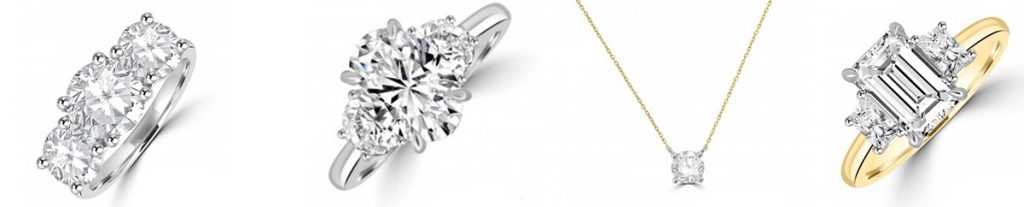
3. Evaluate Cut Quality
Lab-grown diamonds, like natural ones, are graded on cut quality. Look for cuts graded as “Excellent” or “Ideal” by reputable certification bodies like IGI or GIA to ensure optimal brilliance and fire.
4. Balance Cut with Budget
Lab-grown diamonds are more budget-friendly than natural diamonds, allowing you to prioritise cut quality. Opting for a high-quality cut ensures your diamond looks stunning, even if you choose a slightly smaller carat weight.
5. Consider the Setting
The jewellery setting plays a pivotal role in showcasing the diamond cut. For example:
- Solitaire settings work beautifully with round or princess cuts, drawing attention to the diamond.
- Halo settings enhance the sparkle of cushion or oval cuts by surrounding the centre diamond with smaller stones.
- Three-stone settings are ideal for emerald or pear shapes, offering a balance of elegance and symbolism.
6. Match the Cut to Personal Style
Choosing a diamond cut that reflects the wearer’s personality ensures the piece feels meaningful. A round cut suits someone who loves tradition, while a pear shape might appeal to someone seeking a unique, standout piece.
7. Trust Reputable Jewellers
Always buy lab-grown diamonds from trusted jewellers who provide certified stones. Reputable jewellers will help you explore various cuts, ensuring you make an informed decision.
Final Thoughts
Choosing the best lab-grown diamond cut is about finding the perfect balance between brilliance, shape, and style. By understanding the nuances of each cut, you can confidently select a diamond that radiates beauty and matches your vision. Ready to start your search? Explore our exquisite range of lab-grown diamonds today!
Notice: Lab-grown diamonds may have a lower resale value than mined diamonds, but they hold significant value in terms of beauty, sentiment, and symbolism. Natural diamonds, with their rarity and enduring legacy, often retain value over time, making them a timeless choice for many.
We proudly offer both natural and lab-grown diamonds, allowing you to select the option that best aligns with your values and vision for a truly special piece of jewellery.