Lab-grown diamonds are a remarkable achievement in science and technology, offering consumers an alternative choice for fine jewellery. These diamonds are created in advanced laboratory environments that replicate the natural processes responsible for forming diamonds beneath the Earth’s surface.
Lab-grown diamonds are graded according to the same rigorous standards, ensuring consistency and transparency for buyers. The 4 Cs—Cut, Colour, Clarity, and Carat Weight—serve as the universal framework for assessing a diamond’s quality, beauty, and value.
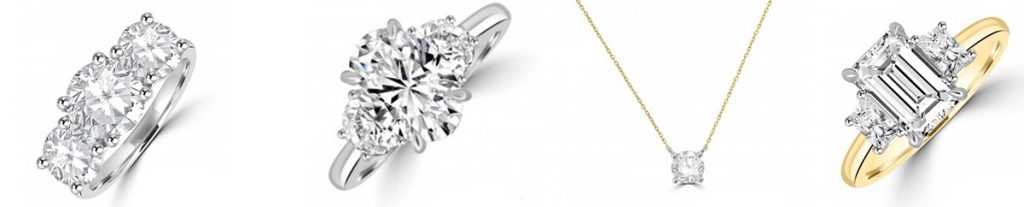
The Importance of Diamond Grading
Grading plays a critical role in establishing trust within the diamond market. By providing a reliable and objective evaluation of a diamond’s quality, it empowers consumers to make informed purchasing decisions. Diamond grading also facilitates fair pricing. It allows buyers to compare options based on clearly defined metrics, balancing aesthetic appeal and value.
Understanding the 4 Cs in Diamond Grading
The 4 Cs—Cut, Colour, Clarity, and Carat Weight—are internationally recognised standards used to evaluate the quality of all diamonds, whether natural or lab-grown. Each C contributes uniquely to a diamond’s appearance and overall value.
Cut: Crafting the Perfect Sparkle
What is Diamond Cut?
The cut of a diamond refers to how well it has been shaped and polished to enhance its ability to reflect light. A well-cut diamond exhibits brilliance, fire, and scintillation, which together create its signature sparkle.
Ideal Cuts for Maximum Brilliance
Popular cuts like round, princess, and cushion are designed to maximise light performance.
Grading Scales for Cut
Cut grades range from Excellent to Poor, with Excellent cuts offering optimal light reflection. The precision of the cut directly impacts the diamond’s brilliance and value.
Colour: The Subtle Shades of Beauty
How Colour is Evaluated in Lab-Grown Diamonds
Colour grading measures the absence of colour in a diamond. The closer a diamond is to being colourless, the higher its grade. Lab-grown diamonds are produced in controlled environments, which can result in minimal colour variation.
Grading Scales for Diamond Colour
Diamonds are graded on a scale from D (completely colourless) to Z (light yellow or brown). D-F diamonds are prized for their purity, while G-J diamonds offer excellent near-colourless options.
Clarity: The Purity Within
What Does Clarity Mean?
Clarity refers to the presence of internal features (inclusions) or surface characteristics (blemishes). While diamonds are formed under high-pressure conditions.
Grading Clarity in Diamonds
Clarity grades range from Flawless (FL) to Included (I1-I3). Lab-grown diamonds are frequently graded in the VS (Very Slightly Included) to VVS (Very, Very Slightly Included) range, providing a clean and elegant look.
Carat Weight: Size and Significance
Understanding Carat Weight
Carat weight measures a diamond’s physical weight. Larger diamonds often command higher prices, but the precision of the cut and the balance of the 4 Cs ultimately determine their beauty.
Certification and Standards in Lab-Grown Diamond Grading
Certification provides a reliable evaluation of a diamond’s quality. Organisations like the International Gemological Institute (IGI) issue comprehensive reports detailing the 4 Cs and other characteristics, ensuring buyers have all the information they need.
Notice: Lab-grown diamonds may have a lower resale value than mined diamonds, but they hold significant value in terms of beauty, sentiment, and symbolism. Natural diamonds, with their rarity and enduring legacy, often retain value over time, making them a timeless choice for many.
We proudly offer both natural and lab-grown diamonds, allowing you to select the option that best aligns with your values and vision for a truly special piece of jewellery.